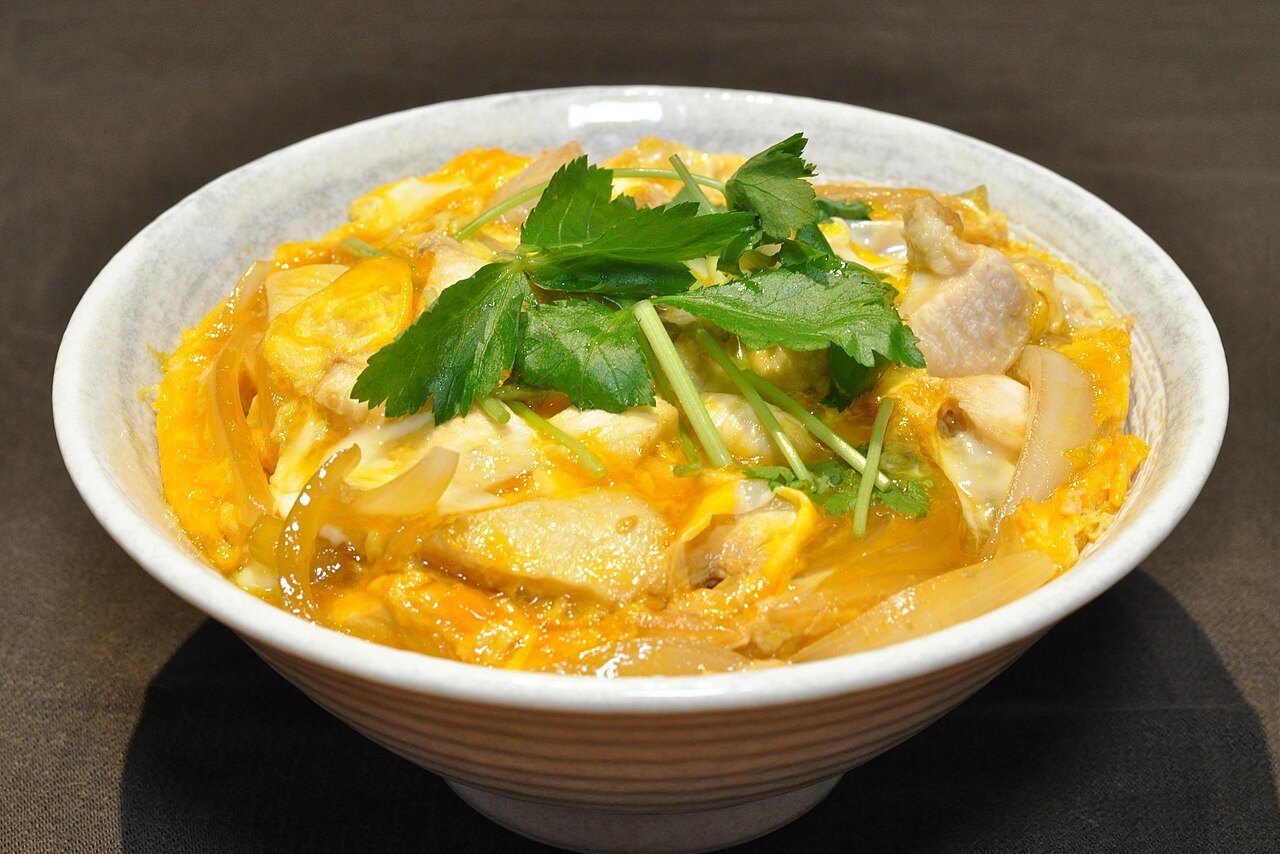
Oyakodon is Japanese home cooking at its most comforting: bite-size chicken and sliced onion simmered in a light, savory-sweet broth of dashi, soy sauce, and mirin, then finished with beaten eggs that set into soft, silky curds. Everything slides over a bowl of hot rice, and the broth soaks in. The name means "parent and child bowl" — chicken and egg.
Photo: Ocdp via Wikimedia Commons, CC0
It’s a perfect 20-minute dinner because the ingredients are simple and the method is one skillet. The only real skill is knowing when to pull the pan off the heat: you want the eggs just set, still glossy and soft, not scrambled and dry.
Prep: 8 min · Cook: 12 min · Total: 20 min · Serves: 4
Ingredients
Broth
- 1 cup (240 ml) dashi (1 tsp instant dashi granules dissolved in 1 cup hot water), or low-sodium chicken broth
- 3 Tbsp (45 ml) soy sauce
- 2 Tbsp (30 ml) mirin
- 1 Tbsp (12 g) sugar
Chicken and eggs
- 1 lb (454 g) boneless, skinless chicken thighs, cut into 1-inch pieces
- 1 medium yellow onion, halved and sliced 1/4 inch thick
- 5 large eggs
- 2 scallions, thinly sliced, or a handful of mitsuba or cilantro leaves
- 4 cups (about 600 g) hot cooked short-grain rice
- Shichimi togarashi, for serving, optional
Method
- Combine the dashi, soy sauce, mirin, and sugar in a 10- or 12-inch skillet with a lid and bring to a simmer over medium heat.
- Add the onion and simmer 3–4 minutes, until it starts to soften and turn translucent.
- Add the chicken in an even layer. Simmer 6–7 minutes, turning the pieces once, until cooked through (165°F / 74°C). The broth will reduce slightly.
- While the chicken cooks, crack the eggs into a bowl and beat them loosely with chopsticks or a fork — about 10 strokes. You want streaks of white and yolk, not a uniform mixture; that’s what gives oyakodon its marbled look.
- Pour about two-thirds of the egg evenly over the chicken and onions. Cover and cook 1 minute, until the edges begin to set.
- Pour in the remaining egg, sprinkle with the scallions, cover, and turn off the heat. Let stand 1–2 minutes, until the eggs are set but still soft and glossy on top. Cook a little longer if you prefer firmer eggs.
- Divide the rice among bowls. Use a large spatula to slide a quarter of the chicken and egg, with some broth, over each bowl. Sprinkle with shichimi togarashi if you like.
Cook's note
Japanese cooks often make oyakodon one portion at a time in a small pan, which gives each bowl a picture-perfect egg layer. For a family dinner the big-skillet method is much faster; just cut it into four wedges with your spatula and transfer gently. Cook eggs to whatever doneness your household is comfortable with.
Swaps and variations
- Dashi: Chicken broth works well if you can’t find dashi; add 1 tsp extra soy for depth.
- Protein: Thinly sliced beef makes tanindon ("stranger’s bowl"); fried tofu or leftover chicken katsu are other popular variations.
- Sweetness: Reduce the sugar to 2 tsp for a more savory bowl, or add up to 1 Tbsp more mirin for a sweeter one.
- Rice: Any short- or medium-grain rice; brown rice works if you like a nuttier bowl.
What to serve with it
Serve with miso soup and a simple vegetable side, like blanched spinach with sesame dressing or quick-pickled cucumbers. A little pickled ginger or tsukemono on the side is traditional.
Storage and reheating
Oyakodon is best fresh. Leftover chicken-and-egg topping keeps 1–2 days in the fridge, separate from the rice. Reheat gently in the microwave at 50% power, covered, until just warm, so the eggs don’t turn rubbery. Not suitable for freezing.
Troubleshooting
- Eggs rubbery? They cooked too long. Turn off the heat as soon as you add the second pour and let residual heat finish them.
- Too salty? Use low-sodium soy sauce or add a few tablespoons of water to the broth.
- Chicken tough? The broth boiled too hard. Keep it at a gentle simmer.
FAQ
What does oyakodon taste like?
Savory and slightly sweet, like a mild teriyaki broth, with silky eggs and tender chicken. It isn’t spicy.
Where do I find dashi?
Instant dashi granules (often Hondashi brand) are sold in the Asian aisle of many supermarkets and at Asian groceries.
Can I use chicken breast?
Yes. Slice it thin and simmer only 4–5 minutes so it stays tender.
More weeknight ideas
For more Japanese-inspired weeknight cooking, try the Teriyaki Chicken Udon Skillet or the Teriyaki Salmon Rice Skillet. Love a rice bowl? Our Korean-Style Ground Beef Bowls are another 20-minute favorite.