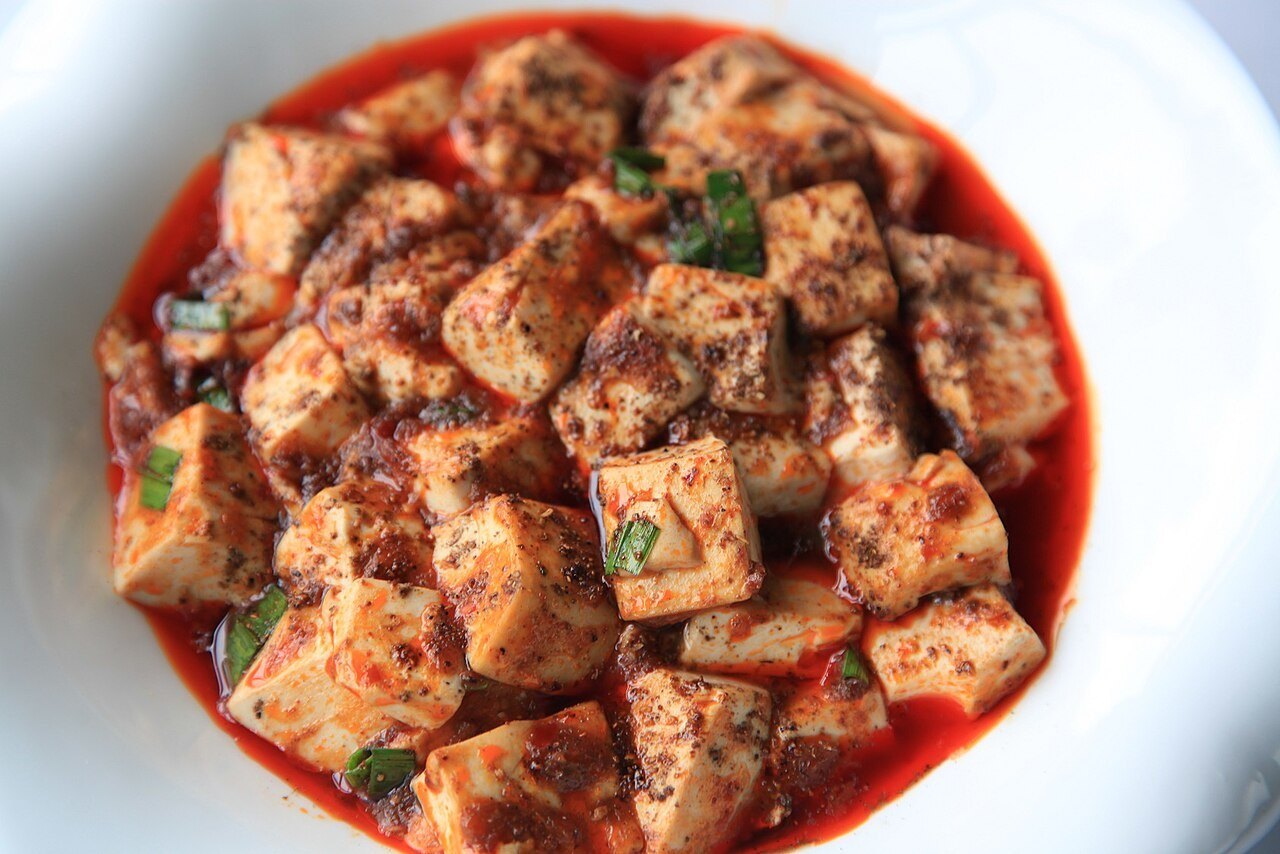
Mapo tofu is one of the fastest truly great dinners you can make: soft cubes of tofu in a glossy, brick-red sauce built from fermented chili bean paste, a little ground pork, garlic, and ginger, finished with the numbing buzz of Sichuan peppercorns. It takes about 25 minutes and one skillet, and it makes a modest amount of meat feed four people.
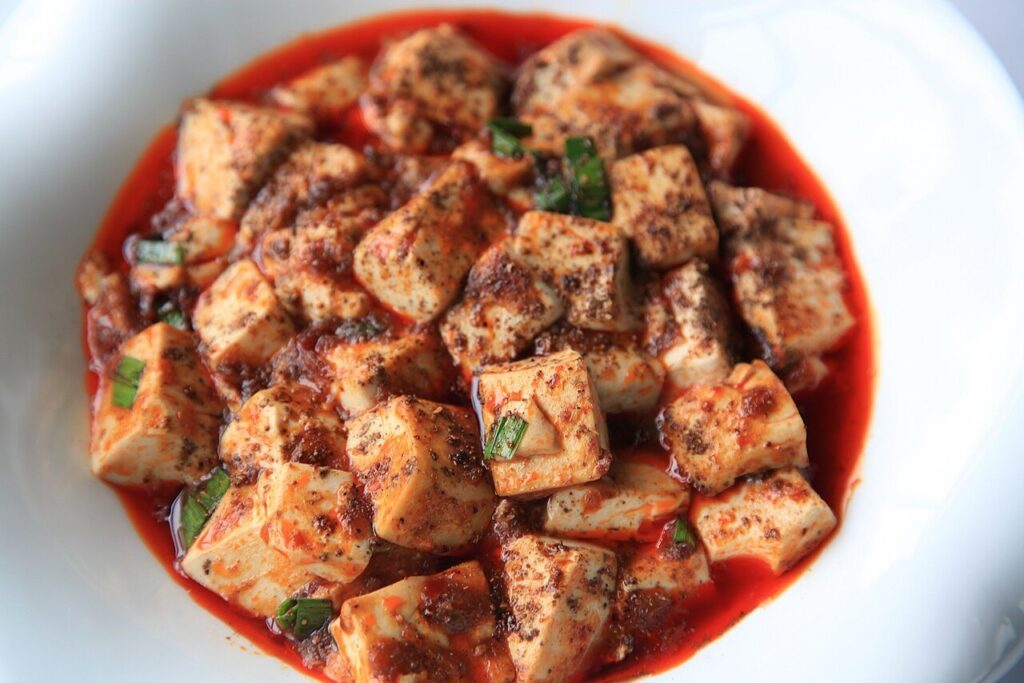
Photo: Sichuanfoodlover via Wikimedia Commons, CC BY-SA 4.0
The one ingredient worth seeking out is doubanjiang (also sold as Pixian chili bean paste or toban djan). It brings the deep, salty, fermented heat that makes mapo tofu taste like itself. Most Asian groceries carry it, and a jar keeps for months in the fridge. Everything else is probably already in your kitchen.
Prep: 10 min · Cook: 15 min · Total: 25 min · Serves: 4
Ingredients
Tofu
- 1 block (14–16 oz / 400–450 g) medium-firm or firm tofu (not silken)
- 1 tsp kosher salt, for the water
Sauce
- 1 tsp Sichuan peppercorns
- 1 Tbsp (15 ml) neutral oil
- 6 oz (170 g) ground pork
- 2–3 Tbsp (35–50 g) doubanjiang (chili bean paste), to taste
- 1 tsp fermented black beans, rinsed and chopped, optional
- 3 garlic cloves, minced
- 1 Tbsp (6 g) minced fresh ginger
- 1–2 tsp chili crisp or chili oil, optional
- 1 cup (240 ml) low-sodium chicken broth or water
- 1 tsp soy sauce
- 1/2 tsp sugar
- 1 Tbsp (8 g) cornstarch mixed with 3 Tbsp (45 ml) cold water
- 3 scallions, thinly sliced
- Steamed rice, for serving
Method
- Toast the Sichuan peppercorns in a dry 12-inch skillet over medium heat for 1–2 minutes, shaking the pan, until fragrant. Tip them out, cool, and grind in a mortar or spice grinder. Set aside.
- Cut the tofu into 3/4-inch cubes. Bring a small pot of water to a bare simmer, add 1 tsp salt and the tofu, and let it sit in the hot water 2–3 minutes. Lift out with a slotted spoon. This firms the surface so the cubes hold together in the sauce, and seasons them lightly.
- Heat the oil in the skillet over medium-high heat. Add the pork and cook 3–4 minutes, breaking it into small crumbles, until it loses its pink color and starts to crisp in spots.
- Lower the heat to medium. Push the pork aside and add the doubanjiang to the oil. Fry it 1 minute, stirring, until the oil turns red and smells rich. Add the black beans, garlic, and ginger and stir 30 seconds.
- Pour in the broth, soy sauce, and sugar and bring to a simmer. Slide in the tofu and gently nudge it into the sauce with the back of a spatula — push, don’t stir, so the cubes stay whole. Simmer 4–5 minutes.
- Stir the cornstarch slurry, then drizzle it in a third at a time, gently shaking the pan between additions, until the sauce turns glossy and clings to the tofu. You may not need all of it.
- Off the heat, stir in most of the scallions and chili crisp if using. Sprinkle with ground Sichuan pepper (start with half and add more at the table) and the remaining scallions. Serve right away over hot rice.
Cook's note
Doubanjiang brands vary wildly in salt and heat, which is why the amount is a range. Start with 2 Tbsp, taste the sauce before the tofu goes in, and add more if you want it bolder. Because the paste is so salty, hold off on extra salt until the very end.
Swaps and variations
- Vegetarian: Skip the pork and use 6 oz finely chopped shiitake or cremini mushrooms, browned well, plus vegetable broth.
- Ground meat: Ground beef is very traditional in some regions; ground chicken or turkey works if you add an extra teaspoon of oil.
- Mild version: Use 1 1/2 Tbsp doubanjiang and skip the chili crisp. Kids often like it with extra rice and a fried egg.
- No Sichuan peppercorns? The dish is still good without them, just less tingly. A little freshly ground black pepper adds a different kind of bite.
What to serve with it
Plenty of short- or medium-grain rice is non-negotiable; the sauce is meant to be spooned over it. Add a quick side of garlicky stir-fried greens or smashed cucumber salad to cool things down.
Storage and reheating
Refrigerate leftovers up to 3 days. Reheat gently in a covered skillet over medium-low or in the microwave at 50% power so the tofu doesn’t toughen; add a spoonful of water if the sauce has set up. Tofu changes texture when frozen, so this one is best kept in the fridge rather than the freezer.
Troubleshooting
- Tofu breaking apart? Use medium-firm or firm tofu, give it the hot-water soak, and move it with the back of a spatula instead of stirring.
- Sauce too thin? Add a little more slurry and simmer 30 seconds. Too thick? Loosen with a splash of broth.
- Too salty? Add a few tablespoons of water and a pinch of sugar, and serve with more rice. Next time use less paste.
FAQ
Can I use silken tofu for mapo tofu?
Soft or silken tofu gives the most custardy texture but is fragile. If you use it, skip stirring entirely and just shake the pan. Medium-firm is the easiest middle ground for weeknights.
Is mapo tofu very spicy?
It can be. Heat comes from the chili bean paste and chili oil, and you control both. Sichuan pepper is numbing rather than hot.
What is a substitute for doubanjiang?
There’s no perfect swap. In a pinch, mix 1 1/2 Tbsp gochujang with 1 tsp soy sauce and 1 tsp chili flakes. It will taste different but still good.
More weeknight ideas
Want more tofu dinners? Our Soy Garlic Tofu Broccoli Skillet is milder and kid-friendly. For another ground-pork skillet with big flavor, try the Five-Spice Pork and Cabbage Skillet, and turn leftover rice into 25-Minute Garlic Egg Fried Rice with Veggies the next night.