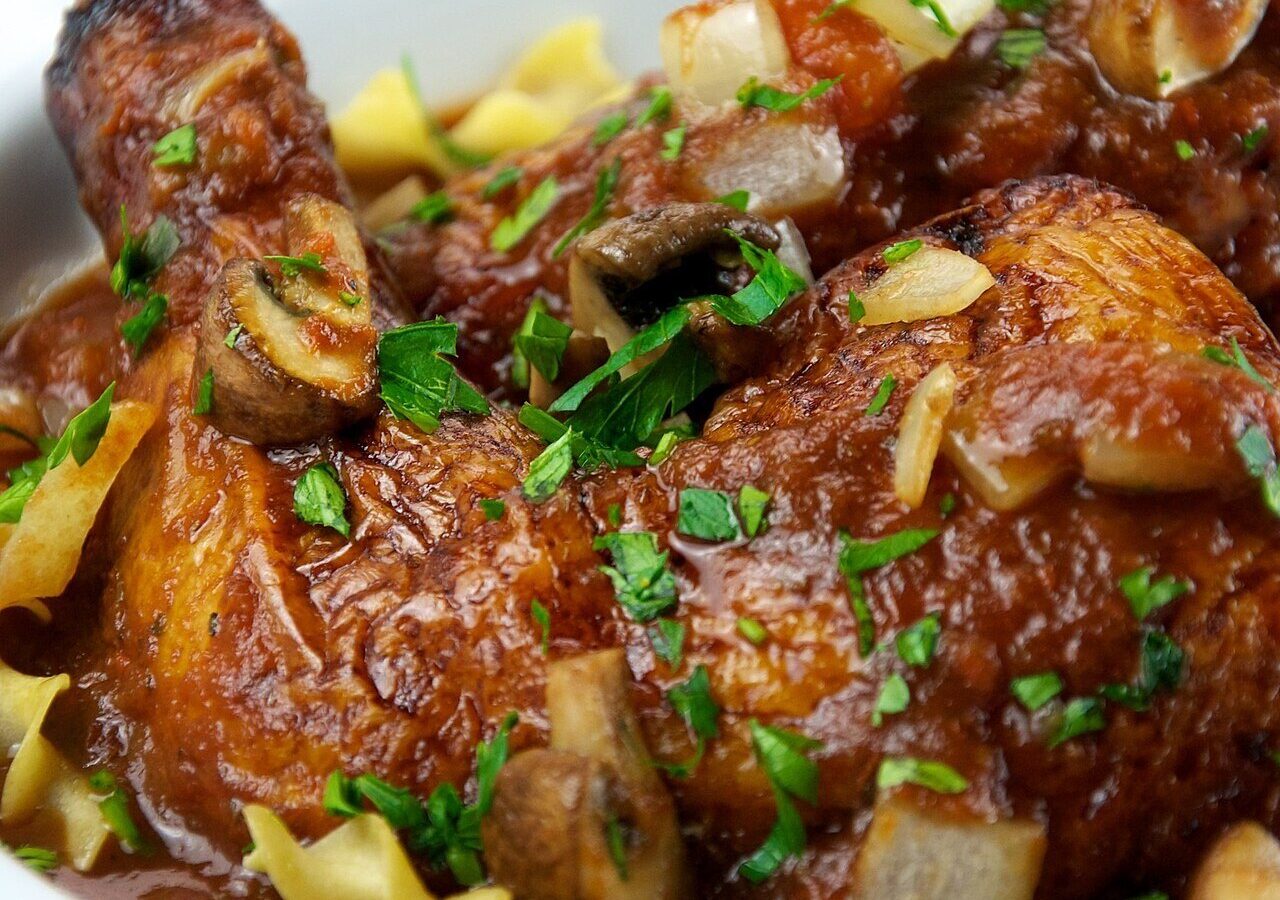
Classic cacciatore is a Sunday braise: bone-in chicken, a long simmer, the whole house smelling like tomatoes and rosemary. On a Tuesday you don’t have that hour, but you can get most of the flavor by doing two things well — searing boneless thighs hard enough to leave a brown layer in the pan, and browning the mushrooms in that same fat before the tomatoes go in.
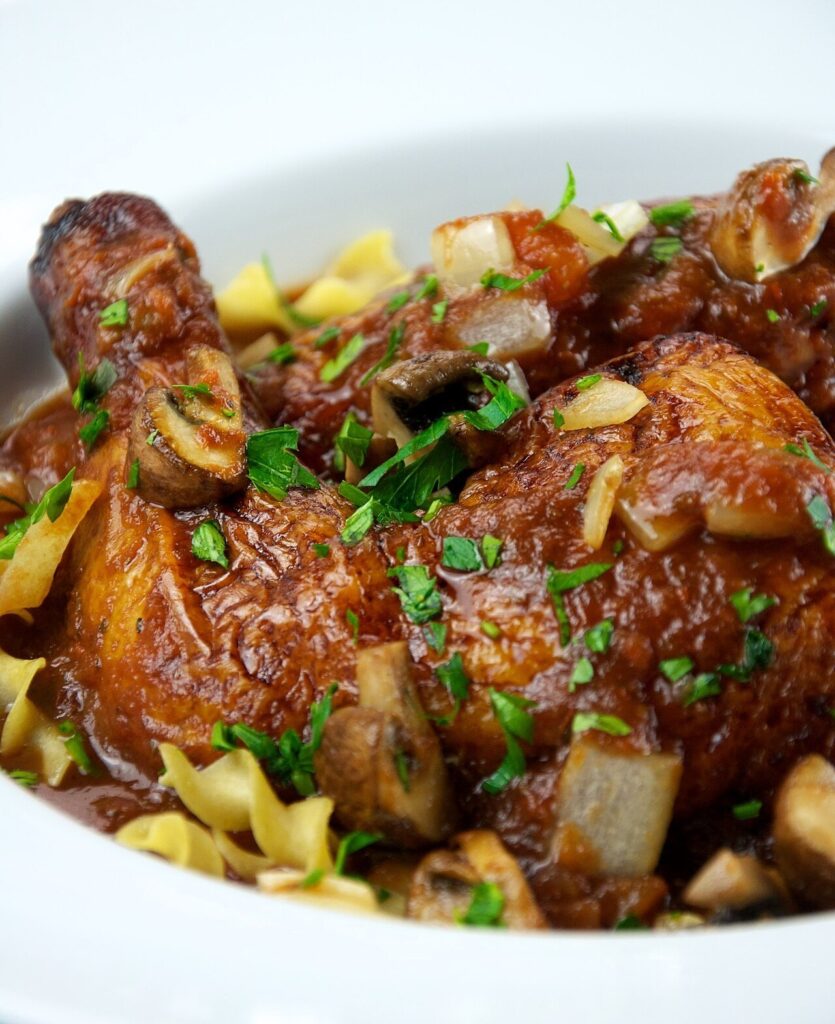
Photo: Evan Joshua Swigart (TheCulinaryGeek) via Wikimedia Commons, CC BY 2.0
That brown layer (the fond) is what makes a 15-minute sauce taste like it cooked all afternoon. Splash in a little wine, scrape it up, and let the chicken finish gently in the sauce. Serve it over pasta, polenta, or a hunk of crusty bread, and keep the extra sauce — it is even better the next day.
Prep: 10 min · Cook: 22 min · Total: 32 min · Serves: 4
Ingredients
Chicken
- 1 1/2 lb (680 g) boneless, skinless chicken thighs (about 6)
- 1 tsp kosher salt
- 1/2 tsp black pepper
- 2 Tbsp (30 ml) olive oil, divided
Sauce
- 8 oz (225 g) cremini mushrooms, sliced
- 1 medium yellow onion, sliced (about 1 1/2 cups / 170 g)
- 1 red or green bell pepper, sliced (about 1 cup / 140 g)
- 4 garlic cloves, thinly sliced
- 1 tsp dried oregano
- 1 tsp fresh rosemary, finely chopped (or 1/2 tsp dried)
- 1/4–1/2 tsp red pepper flakes
- 1 Tbsp (16 g) tomato paste
- 1/2 cup (120 ml) dry white wine (or chicken broth plus 1 tsp red wine vinegar)
- 1 can (28 oz / 794 g) crushed tomatoes
- 2 Tbsp (18 g) capers or 1/3 cup sliced Kalamata olives, optional
- 1/4 cup (10 g) chopped parsley or basil
- Cooked pasta, polenta, or crusty bread, for serving
Method
- Pat the thighs dry with paper towels and season both sides with the salt and pepper. Dry chicken browns; damp chicken steams.
- Heat 1 Tbsp oil in a 12-inch skillet over medium-high heat until it shimmers. Lay in the thighs smooth side down and leave them alone for 4–5 minutes, until deep golden. Flip and cook 2 minutes more (they will not be cooked through). Move to a plate.
- Add the remaining 1 Tbsp oil and the mushrooms. Spread them in one layer and cook without stirring for 3 minutes, then stir and cook 2–3 minutes more until browned and the pan looks dry again.
- Add the onion and bell pepper with a pinch of salt. Cook 4 minutes, stirring now and then, until the onion softens at the edges.
- Stir in the garlic, oregano, rosemary, and pepper flakes for 30 seconds, then the tomato paste for 1 minute until it darkens a shade.
- Pour in the wine and scrape the bottom of the pan hard with a wooden spoon. Simmer 1–2 minutes until reduced by about half.
- Add the crushed tomatoes and capers or olives if using. Nestle the chicken back in with any juices from the plate. Bring to a simmer, partially cover, and cook over medium-low heat 12–15 minutes, until the thighs reach 175°F (80°C) and the sauce is thick enough to coat a spoon.
- Taste and adjust salt (capers and olives add plenty). Scatter parsley or basil and serve over pasta or polenta.
Cook's note
Thighs are the right cut here. They stay juicy through the simmer and actually get more tender between 165°F and 175°F, which is the opposite of breasts. If you only have breasts, slice them in half horizontally, sear for just 2 minutes per side, and simmer only 6–8 minutes so they don’t turn chalky.
Swaps and variations
- Wine: Dry white is traditional for a lighter cacciatore; dry red gives a darker, heartier sauce. Broth plus a little vinegar works if you skip alcohol.
- Bone-in thighs: Brown skin side down 6–7 minutes, then simmer covered 25–30 minutes. It is no longer a 30-minute dinner, but the skin and bones add body.
- Vegetables: Add a diced zucchini with the peppers, or stir a few handfuls of baby spinach in at the end.
- Heat: Swap the pepper flakes for one minced Calabrian chile or a spoonful of Calabrian chile paste.
What to serve with it
Buttered egg noodles or short pasta are the easy American way; soft polenta is the Italian one. A green salad with a sharp vinaigrette and some garlic bread round it out. If you want leftovers for lunch, cook an extra half pound of pasta and toss it with the leftover sauce.
Storage and reheating
Cool and refrigerate in an airtight container up to 4 days. Reheat covered in a skillet over medium-low with a splash of water or broth until the chicken is hot through, about 8–10 minutes, or microwave in 1-minute bursts. The sauce (with or without chicken) freezes well for up to 3 months; thaw overnight in the fridge. Store pasta separately so it doesn’t drink up all the sauce.
Troubleshooting
- Sauce tastes sharp or tinny? Simmer a few minutes longer, then stir in a teaspoon of butter or a pinch of sugar to round out the acidity.
- Mushrooms watery and gray? The pan was crowded or not hot enough. Next time cook them in two batches, and wait to salt until they brown.
- Chicken stuck when you tried to flip it? It wasn’t ready. Give it another minute; well-seared chicken releases on its own.
FAQ
Can I make chicken cacciatore ahead?
Yes. Make it completely, cool, and refrigerate up to 2 days. The flavor deepens overnight. Reheat gently and add fresh herbs just before serving.
Is cacciatore supposed to have mushrooms?
Recipes vary by region and family. Mushrooms, peppers, and onions are the most common American version; some Italian versions use only rosemary, garlic, vinegar, and olives. This one sits in the middle.
What can I use instead of crushed tomatoes?
A 28-oz can of whole peeled tomatoes crushed by hand, or diced tomatoes pulsed briefly in a blender. Passata works too; add a splash of water if it’s very thick.
More weeknight ideas
If you like this kind of sear-then-simmer dinner, try our Skillet Chicken Marsala, which uses the same browned-bits technique with a mushroom-wine sauce. For more on getting that first sear right, read How to Sear Chicken in a Skillet Without Steaming It, and How to Build a Weeknight Pan Sauce explains why scraping the pan matters so much.