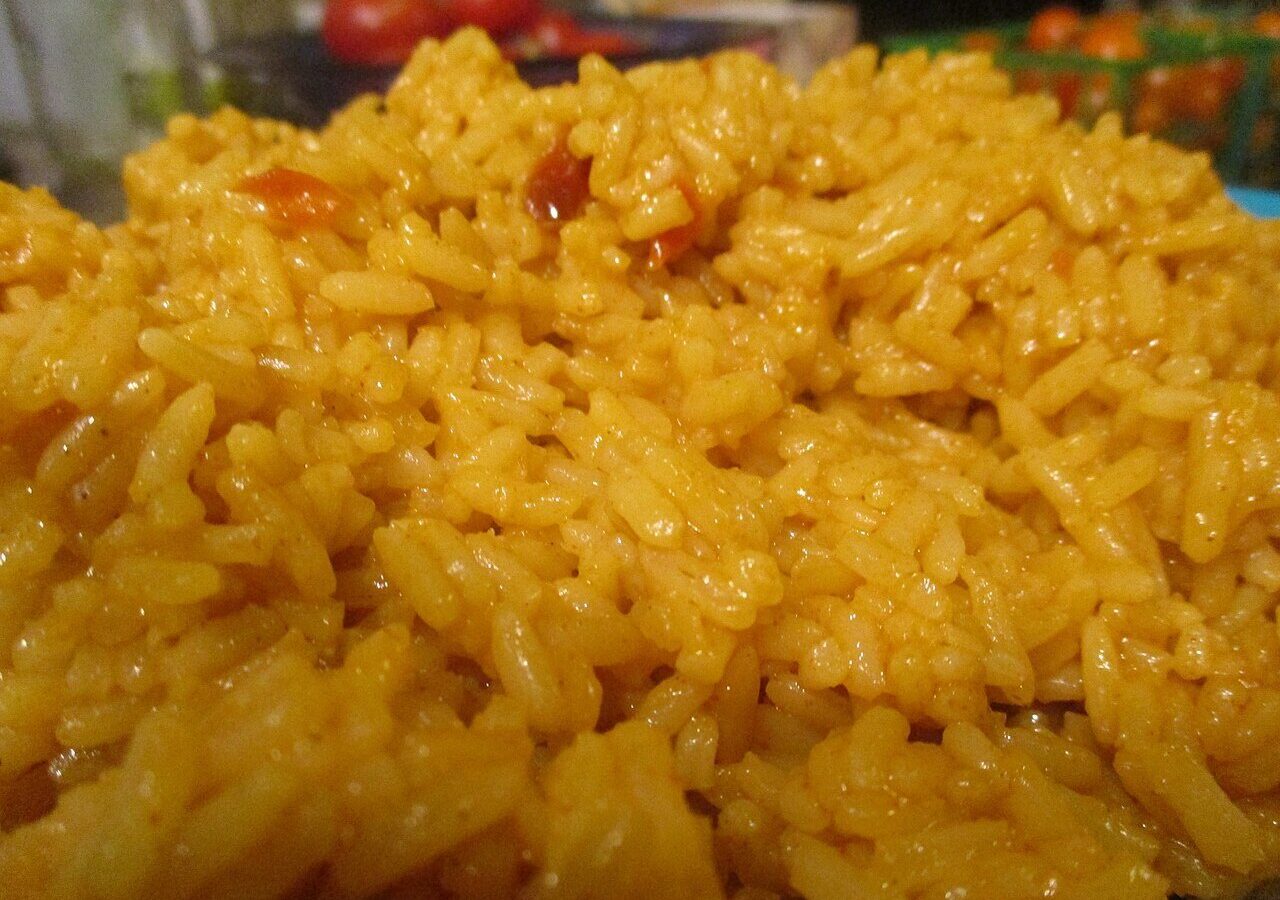
A lot of the dinners on this site end the same way: you brown some meat and vegetables, stir in rice and broth, cover the pan, and walk away. When it works, it is the best kind of weeknight cooking — one pan, every grain seasoned. When it doesn’t, you get a crunchy top layer, a gluey bottom, or a scorched crust that has nothing to do with the crispy socarrat in paella.
Photo: Bodhi Peace via Wikimedia Commons, CC BY-SA 4.0
The good news is that skillet rice fails for a handful of predictable reasons, and every one of them is fixable. Here is what actually matters, from a cook who has thrown out a few pans of it.
Why a skillet behaves differently from a saucepan
A saucepan is tall and narrow; the rice sits deep and the steam has a short way to travel to the lid. A 12-inch skillet spreads the rice into a thin, wide layer. That’s great for even cooking and for toasting grains in fat, but it also means more surface area, more evaporation, and lids that often fit loosely. In practice, skillets lose more liquid than saucepans, and they heat less evenly across the bottom.
That’s why a stovetop rice ratio printed on the bag doesn’t always transfer straight to a skillet dinner. You’re also cooking the rice with other things — tomatoes, onions, chicken — that add or absorb liquid.
The ratio that works
- Long-grain white rice: 1 cup rice to 1 3/4–2 cups liquid in a 12-inch skillet with a good lid. Start at 1 3/4 if your pan has a tight lid, 2 if it’s loose.
- Jasmine: 1 cup to 1 1/2–1 3/4 cups. It’s softer and stickier, so it needs a little less.
- Basmati: 1 cup to 1 3/4 cups, rinsed well. It’s long and delicate; don’t stir it.
- Brown rice: Needs 40–45 minutes and about 2 1/2 cups liquid. For a 30-minute dinner, use parboiled or quick-cooking brown rice and follow the package.
- What counts as liquid: Broth, water, and the juice from canned tomatoes or salsa. If you add a 14.5-oz can of diced tomatoes, count about 3/4 cup toward your total.
For 4 people, 1 cup of uncooked rice plus a pound of protein and vegetables is about right. Going over 1 1/2 cups of rice in a 12-inch skillet makes the layer too deep to cook evenly.
Rinse, then toast
Rinsing long-grain rice in a strainer under cold water for 30 seconds washes off loose surface starch, which is the main cause of gummy rice. Shake off as much water as you can. Then stir the rice into the hot fat in the pan for 1–2 minutes, until the grains turn slightly translucent at the edges and smell nutty. Toasting coats each grain in oil and helps them stay separate. It’s the step our Skillet Pork Picadillo Rice and Skillet Chicken Enchilada Rice both rely on.
Boil, cover, lower, and leave it alone
- Bring the liquid to a full boil, stir once to unstick the bottom, and spread the rice into an even layer.
- Cover and drop the heat to the lowest setting that keeps a gentle simmer. You should hear a quiet bubbling, not a rattle.
- Set a timer for 15–18 minutes for white rice and don’t lift the lid or stir. Every peek lets steam out, and stirring releases starch.
- If your lid is loose or you don’t have one, cover the pan with a sheet of foil pressed around the rim, then set a baking sheet on top. It works surprisingly well.
Rest it
When the timer goes off, turn off the heat and leave the pan covered for 5–10 minutes. The moisture redistributes, the bottom loosens, and the top grains finish cooking. Then fluff gently with a fork. This resting time solves more problems than anything else on this list.
Adding meat and seafood
- Bite-size raw chicken thighs can go in with the rice and liquid; they cook through in the same 15–18 minutes, as in our Lemongrass Chicken Rice Skillet.
- Chicken breasts or larger pieces are better seared first, set aside, and nestled back on top for the last 8–10 minutes.
- Shrimp go on top of the rice for the last 4–5 minutes of cooking, covered, so they steam without getting rubbery.
- Frozen peas or corn can be scattered over the top right before the resting time.
Troubleshooting skillet rice
- Crunchy top, cooked bottom: Too much evaporation. Sprinkle 1/4 cup hot broth over the top, cover tightly (foil plus lid), and cook on low 5 minutes more, then rest.
- Wet and soupy: Uncover and cook on low 2–4 minutes to let the excess steam off, then rest covered 5 minutes.
- Gummy or mushy: Too much liquid or too much stirring. Spread it on a sheet pan to cool and use it for fried rice the next day — like our Garlic Ginger Chicken Fried Rice.
- Scorched bottom: The heat was too high or the burner too small for the pan. Don’t scrape the burnt layer into the rest. Spoon the good rice off the top, and next time use a lower setting or a heat diffuser.
- Uneven, with raw grains around the edges: The rice wasn’t spread evenly or the burner heats only the center. Rotate the pan once halfway through cooking.
The short version
Rinse and toast the rice, measure the liquid (including tomatoes), boil, cover tight, lower the heat, don’t peek, and rest it 5–10 minutes. Once you have that habit, dinners like our Skillet Chicken Verde Rice turn out right every single time.