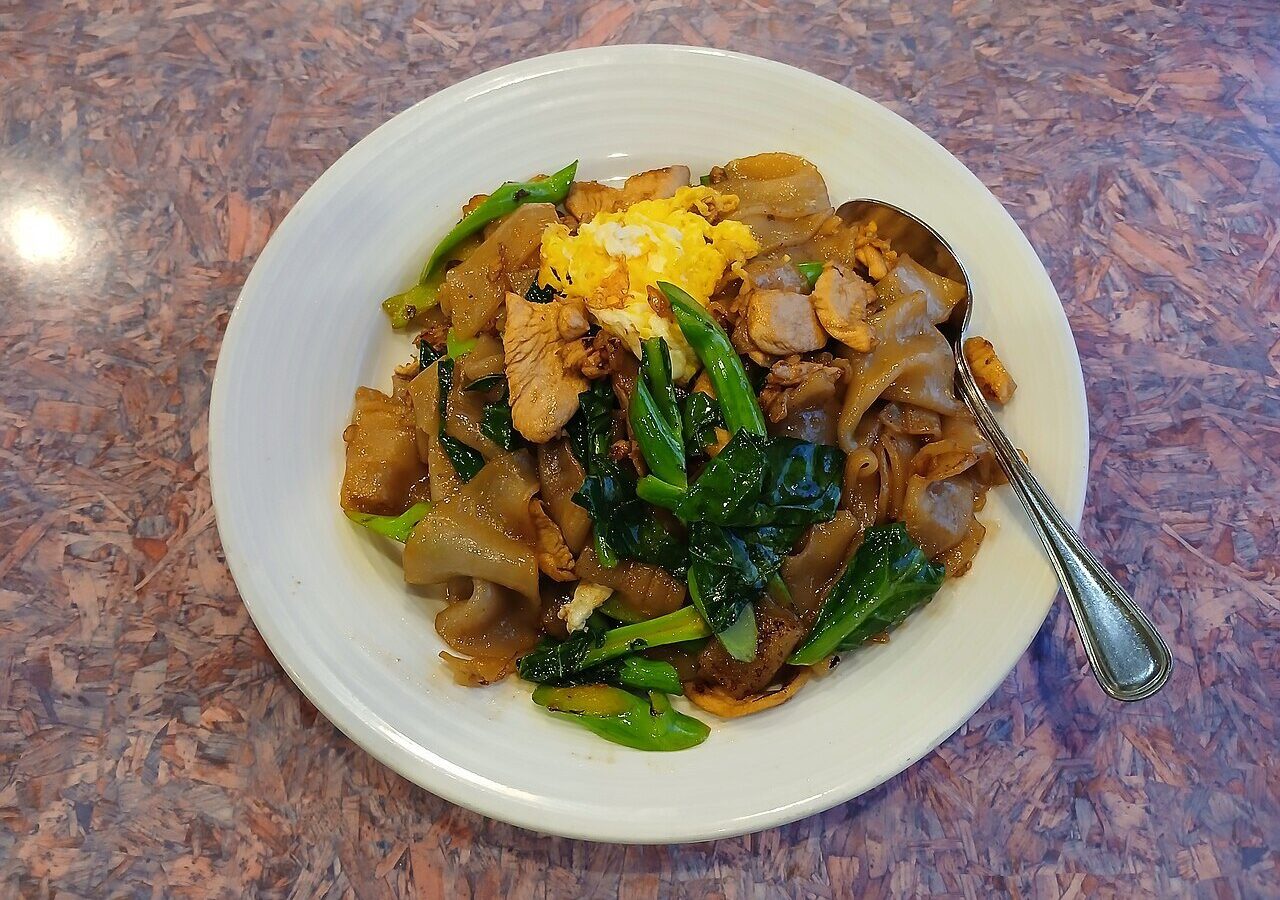
Pad see ew is the quieter cousin of pad thai: wide, chewy rice noodles stir-fried with sweet dark soy sauce, garlic, egg, chicken, and Chinese broccoli until the edges pick up smoky caramelized spots. It’s savory and a little sweet, not spicy unless you add chili at the table, and it’s one of the most comforting noodle dishes there is.
Photo: Ser Amantio di Nicolao via Wikimedia Commons, CC0
At home, the char is the challenge. A Thai street vendor’s wok runs much hotter than a home burner, so the trick in a skillet is to cook in two batches and let the noodles sit untouched for a minute at a time. It turns out better than most takeout, and it’s ready in about 30 minutes.
Prep: 15 min · Cook: 12 min · Total: 27 min · Serves: 3
Ingredients
Noodles and chicken
- 14–16 oz (400–450 g) fresh wide rice noodles, or 8 oz (225 g) dried wide rice noodles
- 12 oz (340 g) boneless, skinless chicken thighs, thinly sliced
- 1 tsp soy sauce
- 1 tsp cornstarch
- 3 Tbsp (45 ml) neutral oil, divided
- 4 garlic cloves, minced
- 8 oz (225 g) Chinese broccoli (gai lan) or broccolini, stems sliced thin on an angle, leaves cut in 2-inch pieces
- 2 large eggs
Sauce
- 2 Tbsp (30 ml) dark soy sauce or Thai sweet soy sauce
- 1 Tbsp (15 ml) oyster sauce
- 1 Tbsp (15 ml) regular soy sauce
- 2 tsp sugar
- 1 tsp rice vinegar or distilled white vinegar
- 2 Tbsp (30 ml) water
At the table
- Chili flakes
- Rice vinegar with sliced chiles
- Extra sugar
Method
- Prepare the noodles. Fresh noodles: if they’re cold and stiff, microwave in their package 30–60 seconds, then gently peel apart into individual strips. Dried noodles: soak in very hot tap water 8–10 minutes until pliable but still firm, drain, and toss with 1 tsp oil.
- Toss the chicken with the soy sauce and cornstarch. Whisk the sauce ingredients in a small bowl.
- Heat 1 Tbsp oil in a 12-inch skillet over high heat. Add the chicken in one layer and cook 2 minutes undisturbed, then stir and cook 1 minute more until just cooked. Add half the garlic and the broccoli stems; stir-fry 1 minute. Add the leaves and 1 Tbsp water and toss until bright green and wilted, about 1 minute. Transfer everything to a plate.
- Add 1 Tbsp oil to the hot pan. Add half the noodles and spread them out. Drizzle with half the sauce and toss briefly to coat, then leave them alone for 45–60 seconds so the bottom caramelizes. Toss and repeat once. Push the noodles to one side.
- Crack 1 egg into the empty side of the pan, scramble it lightly, and let it set for 20 seconds before tossing it through the noodles.
- Add half the chicken and broccoli back in and toss 30 seconds. Transfer to a serving platter.
- Repeat with the remaining oil, garlic, noodles, sauce, egg, and chicken mixture. Serve hot with chili flakes and chile vinegar at the table.
Cook's note
Fresh wide rice noodles (often labeled "chow fun" or "ho fun" in the refrigerated section) give the best chew, but they break easily when cold. Warming them first and tossing gently with a spatula and a pair of tongs keeps them long and intact. Use them the day you buy them for the best texture.
Swaps and variations
- Protein: Thinly sliced flank steak, peeled shrimp, or pressed tofu all work; cook just until done.
- Vegetables: Regular broccoli florets cut small, bok choy, or napa cabbage instead of gai lan.
- Dark soy: If you can’t find Thai or Chinese dark soy, use 1 Tbsp molasses mixed with 1 Tbsp regular soy sauce for color and sweetness.
- Gluten-free: Use gluten-free tamari and a gluten-free oyster sauce.
What to serve with it
Pad see ew is a full meal on its own. If you want something fresh alongside, serve sliced cucumbers with a squeeze of lime, or a quick Thai-style cucumber salad.
Storage and reheating
Best eaten right away — rice noodles firm up in the fridge. Leftovers keep 2 days. To reheat, sprinkle with a little water and microwave covered, or stir-fry in a hot oiled skillet 2–3 minutes until softened and hot. Freezing isn’t recommended.
Troubleshooting
- Noodles clumping? They weren’t separated before cooking, or the pan was too crowded. Cook in batches and loosen them before they hit the pan.
- Noodles breaking? You’re stirring too much. Toss gently and let them sit to char.
- No smoky char? Pan wasn’t hot enough. Preheat until the oil shimmers, and don’t add more than half the noodles at a time.
FAQ
What’s the difference between pad see ew and drunken noodles?
Both use wide rice noodles. Pad see ew is sweet-savory and mild; drunken noodles (pad kee mao) are spicy with Thai basil and chiles.
Can I use regular soy sauce only?
You can, but the dish won’t have its characteristic dark color and caramel sweetness. Add the molasses trick above for a closer match.
Can I make this for four?
Double the recipe but cook in four batches, or use two skillets at once. Overcrowding is the enemy of good pad see ew.
More weeknight ideas
Craving more Thai flavors? Our Thai Basil Chicken Skillet is a fast, spicy option, and the Thai Peanut Noodle Skillet is a crowd-pleaser. For another noodle stir-fry, try Ginger Pork Stir-Fry Noodles.