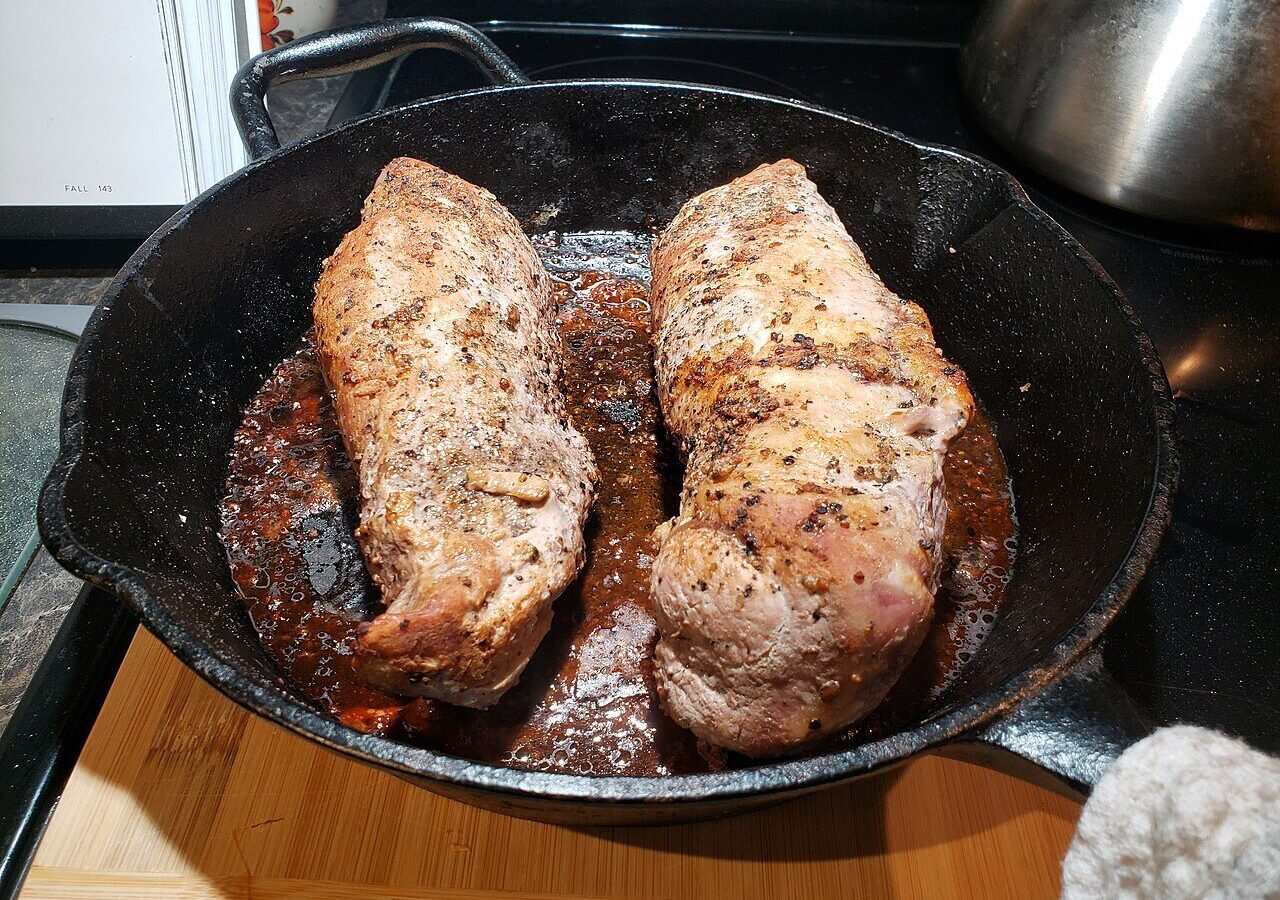
Almost every recipe on this site says "12-inch skillet" and stops there. That’s on purpose — most of them work in any decent pan. But the material does change the result. Cast iron gives you a hard sear, stainless gives you the best pan sauce, and nonstick saves your eggs and fish. If you cook a lot of weeknight dinners, knowing which pan to reach for will fix more problems than any new recipe.
Photo: Taylorderek via Wikimedia Commons, CC BY 4.0
You don’t need all three. But if you’re wondering why your chicken sticks, your sauce tastes flat, or your rice scorches, the pan is often part of the answer.
Cast iron: the heat battery
Cast iron is heavy and slow to heat, and that’s exactly its strength. Once it’s hot, it stays hot, even when you drop cold meat in it. That makes it the best choice for a deep, crusty sear on steaks, burgers, pork chops, and chicken thighs, and for dishes that go from stove to oven or under the broiler, like shepherd’s pie or skillet cornbread.
- Best for: Searing steak and chops, smash burgers, crispy-skinned chicken, skillet bakes and broiler finishes, cornbread.
- Watch out for: Long, acidic simmers. A 15-minute tomato sauce is fine in a well-seasoned pan, but an hour of tomatoes or wine can taste metallic and strip seasoning.
- Care: Rinse with hot water and a brush (a little soap is fine on a seasoned pan), dry on the burner, and wipe with a thin film of oil. Never soak it.
Our tip post on How to Sear Chicken in a Skillet Without Steaming It explains why heat retention matters so much.
Stainless steel (tri-ply): the sauce maker
A good stainless skillet has an aluminum or copper core sandwiched between steel, which spreads heat evenly. It heats faster than cast iron, handles acids without reacting, goes in the oven, and leaves behind those browned bits (fond) that turn into the best pan sauces. If you’ve followed our How to Build a Weeknight Pan Sauce, stainless is the pan it was written for.
- Best for: Pan sauces and gravies, sautéed vegetables, chicken marsala-style dishes, tomato-based simmers, shrimp, rice-and-protein skillets.
- Watch out for: Sticking. Preheat the empty pan 2 minutes, add oil, wait until it shimmers, then add food — and don’t move it until it releases on its own.
- Care: Dishwasher-safe in most cases. Stuck-on bits come off with a splash of water simmered for a minute, or a paste of baking soda or Bar Keepers Friend.
Nonstick: the forgiving one
Nonstick pans are the easiest to cook with and clean, and nothing beats them for eggs, delicate fish, crepes, and anything starchy that loves to glue itself down. They’re also great for beginners and for cooking with less oil.
- Best for: Eggs and omelets, fish fillets, pancakes, oyakodon-style egg dishes, day-old fried rice, and reheating leftovers.
- Watch out for: High heat. Most nonstick coatings shouldn’t be preheated empty or used over high heat for long, and most can’t go under the broiler. Check your pan’s manual for its maximum temperature.
- Care: Use wooden or silicone tools, wash by hand, and replace the pan when the coating is scratched or flaking. Nonstick is a pan you’ll replace every few years.
Carbon steel: the bonus option
Carbon steel is like a lighter, faster-heating cast iron. It seasons the same way, sears beautifully, and gets slicker over time. It’s the go-to in many restaurant kitchens. If you want one pan for searing and stir-fries, it’s worth a look.
Size and shape matter more than brand
- 12-inch with a lid: The workhorse for 4 servings. Most Skillet Night recipes are written for this size.
- 10-inch: Good for 2 servings, eggs, and small batches.
- Deep sauté pan or braiser (3-inch sides): Essential for one-pan pasta like our stovetop baked ziti, and anything with a lot of liquid.
- A lid that fits: It matters more than you’d think for rice dishes and simmering. A sheet pan or foil works in a pinch.
Quick match-up
- Seared steak, pork chops, burgers: Cast iron or carbon steel.
- Pan sauce or gravy dinners: Stainless.
- Eggs, fish, rice noodles: Nonstick.
- Tomato sauces and braises: Stainless or enameled cast iron.
- Stove-to-broiler finishes: Cast iron or stainless (never most nonstick).
- One-pan rice dinners: Stainless or nonstick with a tight lid.
- High-heat stir-fries (kung pao, pad see ew): Carbon steel, cast iron, or stainless — not nonstick on max heat.
If you can only buy one
Get a 12-inch tri-ply stainless skillet with a lid. It does nearly everything well, goes in the oven, and lasts decades. Add an inexpensive 10-inch nonstick for eggs and fish when you can. Cast iron is a wonderful third pan, and often a free hand-me-down.
Not sure where to start? Try the Garlic Butter Shrimp Pasta in stainless, the Soy Garlic Tofu Broccoli Skillet in nonstick, and plan your week with Meal-Prep Skillet Dinners That Still Taste Fresh.